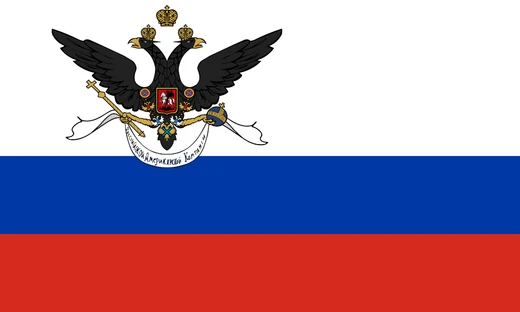
Russian-American Company
State-sponsored chartered company for Russian colonization in America.
The Russian-American Company, operating under the official patronage of the emperor, was a state-backed trading firm created mainly from the earlier United American Company. Tsar Paul I granted it a charter through a decree in 1799, tasking it with founding new colonies in Russian America, trading with Indigenous peoples, and expanding settlement efforts. As Russia’s first joint-stock company, it fell under the direct control of the Imperial Ministry of Commerce. Count Nikolai Petrovich Rumyantsev, who served as Minister of Commerce from 1802 to 1811 and later as Minister of Foreign Affairs, had a major hand in shaping the company’s early direction. In 1801, the company moved its headquarters from Irkutsk to Saint Petersburg, and the original merchant shareholders were soon replaced by members of the nobility and aristocracy.
Rumyantsev paid for Russia’s first global naval voyage, led jointly by Adam Johann von Krusenstern and Nikolai Rezanov from 1803 to 1806. He also funded and oversaw the *Ryurik*’s circumnavigation from 1814 to 1816, which gathered extensive data on the plants and animals of Alaska and California, as well as important cultural information about the region’s Native peoples. During the Russian-California period (1812–1842), when the company ran Fort Ross, the Russians named what is now Bodega Bay, California, “Rumyantsev Bay” in his honor.
**Early history**
In 1799, the Russian government appointed an official called a “Correspondent” to watch over company affairs, with Nikolai Rezanov being the first. This role soon grew into a three-member board of directors: two chosen by shareholders and one appointed by the government. The directors also had to send reports of company activities directly to the tsar. They selected a Chief Manager, who was stationed in North America to oversee forts, trading posts, and outposts. Alexander Andreyevich Baranov became the first Chief Manager. During his time in charge, he established Pavlovskaya and later New Archangel, settlements that served as the company’s operational hubs. He was replaced in 1818 by an officer from the Imperial Russian Navy, and after that, the Chief Manager position was always filled by naval officers.
The 1799 decree gave the company a monopoly on trade in Russian America, with a southern boundary set at 55° N latitude. Tsar Alexander I’s 1821 decree extended that claim to 45°5
- Founded
- 1799
- Dissolved
- Not specified in source
- Field
- Colonial trade and settlement
- Nationality
- Russian
- Known for
- First Russian joint-stock company; colonization of Russian America; monopoly over trade in Russian America
Lore & Background
The Russian-American Company was chartered by Emperor Paul I in 1799, based on the United American Company. Its headquarters moved from Irkutsk to Saint Petersburg in 1801, and merchants as major stockholders were soon replaced by nobility and aristocracy. Count Nikolai Petrovich Rumyantsev, Minister of Commerce and later Minister of Foreign Affairs, exercised pivotal influence on early activities. He funded Russia's first naval circumnavigation (1803–1806) under Krusenstern and Rezanov, and later the Ryurik's circumnavigation (1814–1816), which provided scientific and ethnographic information on Alaska and California.
In 1799, the government appointed Nikolai Rezanov as the first 'Correspondent' to oversee company affairs. This role expanded to a three-seat board of directors, with two elected by stockholders and one appointed by the government. Directors reported directly to the tsar and appointed a Chief Manager stationed in North America. Alexander Andreyevich Baranov was the first Chief Manager, founding Pavlovskaya and New Archangel. After 1818, the position was reserved for Imperial Naval officers.
The Ukase of 1799 granted the company a monopoly over trade in Russian America with a southern border of 55° N latitude. Tsar Alexander I's Ukase of 1821 asserted domain to 45°50′ N, revised to 51° N in 1822. These borders were challenged by Great Britain and the United States, leading to the Russo-American Treaty of 1824 and the Russo-British Treaty of 1825, establishing 54°40′ as the southern limit. The only enforcement attempt was the seizure of the U.S. brig Pearl in 1822, which was released with compensation after U.S. protest.
Reader's Guide
The Russian-American Company was significant as Russia's first joint-stock company and the primary instrument for Russian colonization and trade in North America. It established permanent settlements such as New Archangel (Sitka) and Fort Ross in California, and forcibly conscripted Alutiiq and Aleut men for sea otter hunting. The company faced challenges including difficulty recruiting skilled crewmen due to serfdom and competition from American and British traders. Its efforts to open trade with Qing China via Guangzhou were unsuccessful, forcing furs to be shipped overland to Kyakhta. The company's monopoly and territorial claims led to diplomatic tensions with the United States and Great Britain, resolved by treaties in 1824 and 1825. The Schäffer affair in Hawaii (1817) represented an unauthorized attempt at colonization. The company's legacy includes scientific expeditions funded by Count Rumyantsev and the eventual leasing of part of the Alaska Panhandle to the Hudson's Bay Company in 1838.
Did You Know?
- The company was chartered by Emperor Paul I in the Ukase of 1799.
- Count Rumyantsev funded Russia's first naval circumnavigation (1803–1806) and the Ryurik's circumnavigation (1814–1816).
- The only attempt to enforce the Ukase of 1821 was the seizure of the U.S. brig Pearl in 1822.
- Fort Elizabeth was built in Hawaii in 1817 by company agent Georg Anton Schäffer.
More in Russian colonization of North America 1-24
Spotted an error? Know more?
This is a living reference — every entry is fact-audited, and reader corrections feed straight into our audit queue. Suggest an edit · See this site's audit record