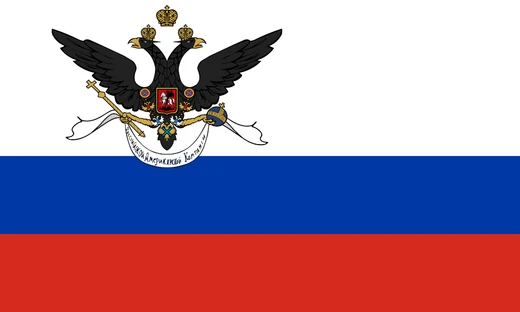
Battle of Sitka
Last major armed conflict between Russians and Alaska Natives.

Wikipedia / Wikimedia Commons
The Battle of Sitka in 1804 was the last major armed conflict between the Russians and Alaska Natives. It was initiated in response to the destruction of a Russian trading post two years earlier. The primary combatants were the Kiks.ádi clan of the Tlingit nation and agents of the Russian-American Company assisted by the Imperial Russian Navy.
- Conflict
- Battle of Sitka
- Year
- 1804
- Location
- Sheetʼká Xʼáatʼi (Baranof Island), Alaska Panhandle
- Combatants
- Kiks.ádi (Tlingit) vs. Russian-American Company and Imperial Russian Navy
- Outcome
- Russian victory; Tlingit abandoned their fort
- Key Russian Commander
- Alexandr Baranov (injured), Lieutenant Commander Yuri Feodorovich Lisyansky
- Key Tlingit Commander
- War Chief Ḵʼalyaan (Katlian)
Lore & Background
The Kiks.ádi clan of the Tlingit people had occupied portions of the Alaska Panhandle for some 11,000 years. In 1799, Alexandr Baranov established a Russian settlement, Redoubt Saint Michael, on Baranof Island after paying the Tlingit for land rights. Tensions grew over Russian customs, demands for allegiance to the Tsar, and competition for resources. In June 1802, Tlingit warriors led by Skautlelt and Kotleian attacked the Russian fort, massacred many, looted pelts, and burned the settlement. A British merchantman rescued survivors and delivered them to Baranov in Kodiak.
Reader's Guide
The Battle of Sitka marked a turning point in Russian colonization of Alaska. Following the 1802 Tlingit victory, Shaman Stoonook urged construction of a new fort, Shís'gi Noow, designed to withstand cannon fire. In September 1804, Baranov returned with the sloop-of-war Neva under Lieutenant Commander Lisyansky, along with armed ships and hundreds of Aleuts. After failed negotiations, the Russians attacked on October 1 but were repulsed with casualties, including Baranov wounded. Lisyansky then bombarded the fort for two days but could not breach its thick walls. The Tlingit, low on gunpowder and awaiting reinforcements that never came, eventually abandoned the fort. The Russians established Novo-Arkhangel'sk on the site, which became the capital of Russian America.
Did You Know?
- The Tlingit fort Shís'gi Noow was built from some 1,000 native spruce logs and measured roughly 240 by 165 feet.
- A Tlingit canoe carrying gunpowder was struck by an errant round, causing an explosion that killed all aboard, including future clan leaders.
- Russian cannon fire could not penetrate the fort's walls at a distance of a cable's length.
- The British merchantman Unicorn extracted a ransom of 10,000 rubles for the return of Russian colonists captured in 1802.
More in Russian colonization of North America 1-24
Spotted an error? Know more?
This is a living reference — every entry is fact-audited, and reader corrections feed straight into our audit queue. Suggest an edit · See this site's audit record