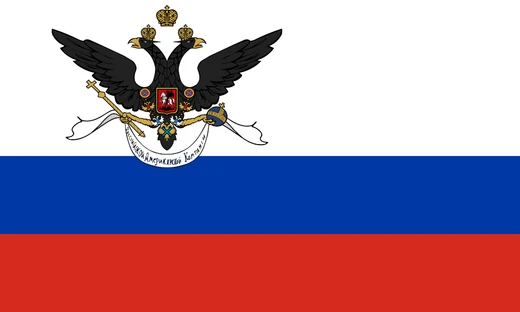
Russian colonization of North America
Russian Empire's Pacific Coast colonies from 1784 to 1867.

Wikipedia / Wikimedia Commons
Russian colonization of North America refers to the territories and colonies claimed by the Russian Empire along the Pacific Coast of North America from 1784 to 1867. These possessions, collectively known as Russian America from 1799 to 1867, consisted mostly of present-day Alaska and included the outpost of Fort Ross in California. The colonization was driven by the fur trade, particularly sea otters, and was administered by the state-sponsored Russian-American Company.
- start_year
- 1784
Lore & Background
Russian expansion eastward began with the conquest of the Khanate of Sibir in the 1580s, and explorers reached the Pacific in 1639. In 1725, Emperor Peter the Great ordered Vitus Bering to explore the North Pacific. Bering's second voyage in 1741, with Aleksei Chirikov, sighted the Alaskan mainland; the Russian government later asserted a claim. The fur trade quickly developed, leading to conflicts with Aleuts in the 1760s. In 1784, Grigory Shelekhov founded the first permanent settlement at Three Saints Bay. The Russian-American Company was formed in 1799 to monopolize the fur trade and promote Russification.
Reader's Guide
Russian colonization of North America was significant for establishing a European presence in the Pacific Northwest, driven by the maritime fur trade. The Russian-American Company served as an imperialist vehicle, and the Russian Orthodox Church evangelized thousands of Native Americans. By the mid-19th century, declining fur profits, competition with the Hudson's Bay Company, Native revolts, and the Crimean War led Russia to sell Fort Ross in 1841 and Alaska to the United States in 1867 for $7.2 million. The legacy includes lasting Orthodox Christian communities in Alaska and the geopolitical shift of the region to U.S. control.
Did You Know?
- The first sighting of the Alaskan coastline by Russians was in 1732 by Ivan Fedorov, who did not land.
- The first permanent Russian settlement in Alaska was founded at Three Saints Bay in 1784 by Grigory Shelekhov.
- In 1802, Tlingit warriors destroyed several Russian settlements, including Redoubt St. Michael and the fort at Sitka.
- The Alaska Purchase in 1867 ended Imperial Russia's colonial presence in the Americas.
Frequently Asked Questions
What was Russian colonization of North America?
It was the era in which the Russian Empire held and administered territories along the Pacific Coast of North America, running from 1732 through 1867. These colonial possessions, formally designated Russian America from 1799 onward, covered most of present-day Alaska and a small settlement in California.
What economic force drove Russia into North America?
The fur trade, particularly the highly prized sea-otter pelt, was the central commercial motivation behind the expansion. This demand from Asian markets pushed Russian traders and eventually the state to establish a permanent foothold on the Pacific coast.
What did the territory of Russian America actually include?
The holdings were centered on what is now Alaska and also encompassed the coastal outpost of Fort Ross in California. Beyond those two main areas, the colonial footprint was relatively limited along the North American continent.
How did Russian colonization of North America come to an end?
The Russian Empire sold its entire North American territorial claim to the United States in 1867, a deal commonly called the Alaska Purchase. That transaction permanently ended over a century of Russian colonial presence on the continent.
What role did the Russian-American Company play?
It was the state-chartered enterprise that both ran the fur-trade operations and served as the de facto governing authority over the colonies. In practice, the company functioned as the administrative backbone of Russian America from its formal establishment until the 1867 sale.
More in Russian colonization of North America 1-24
Spotted an error? Know more?
This is a living reference — every entry is fact-audited, and reader corrections feed straight into our audit queue. Suggest an edit · See this site's audit record