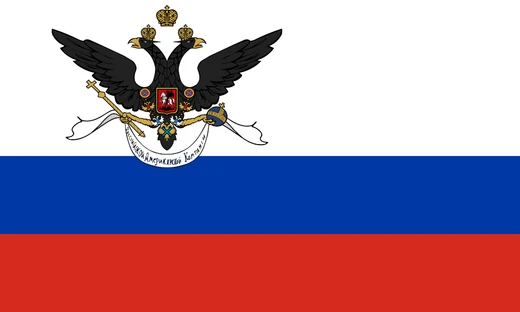
RAC–HBC Agreement
Commercial lease and supply pact between Russian and British fur monopolies.
In 1839, the Russian-American Company and the Hudson's Bay Company signed a set of protocols that stayed in force until 1865. Both monopolies had spent decades securing control over the Maritime fur trade, with the RAC operating in Russian America and the HBC in the Columbia Department of the Oregon Country. As their outposts and trading stations drew closer, a clash occurred in 1834 at Redoubt Saint Dionysius, on the site of present-day Wrangell, Alaska. Officials from both companies saw a need to settle long-standing issues. Ferdinand Wrangel, Governor of Russian America, volunteered to negotiate for the RAC, while the HBC sent George Simpson, Governor of Rupert’s Land. Simpson had earlier told the HBC committee that a settlement with the Russians would let them “put down all competition on the Coast,” reasoning that cutting off Russian markets would deprive American merchants of a key revenue source. In late 1838, the Imperial Government of Russia ordered the RAC to end its disputes with the British before they strained relations with the United Kingdom. Simpson and Wrangel negotiated a commercial treaty in early 1839 while in Hamburg.
Under the original agreement, the Russians granted the HBC exclusive fur trapping rights on a strip of land ten miles wide, north and south of the Stakhina River—the portion of coastline from 54°40′ latitude to a line between Cape Spencer on Cross Sound and Mount Fairweather. This lease began on 1 June 1840 and lasted for ten years. Redoubt Saint Dionysius, with annual expenses of ₽12,000, was handed over to the British. In exchange for these additional trapping areas, the HBC had to provide the RAC with 2,000 land otter pelts each year. The HBC also had to supply New Archangel with 14,000 poods of wheat, worth ₽52,500, along with many other provisions. The sudden demand for agricultural produce led the HBC to create a subsidiary, the Puget Sound Agricultural Company (PSAC). Using British supplies from London proved far cheaper for the RAC than shipping from Kronstadt: naval shipments from Great Britain to Russian America cost only ₽80 per ton, compared to ₽250 from Kronstadt and ₽630 overland through Siberia to Okhotsk. Freight transportation often gave the HBC an annual profit of £4,000.
The agreement was renewed several times with modifications. A different version came into force on 3 April 1849, ending the PSAC’s rol
- signed
- 1839
- expired
- 1865
- field
- Maritime fur trade / colonial commerce
- parties
- Russian-American Company (RAC) and Hudson's Bay Company (HBC)
- negotiators
- Ferdinand Wrangel (RAC) and George Simpson (HBC)
- known_for
- Lease of the Stikine lisière and supply of wheat to New Archangel
Lore & Background
The agreement originated from escalating tensions after a clash in 1834 at Redoubt Saint Dionysius (modern Wrangell, Alaska). Ferdinand Wrangel, Governor of Russian America, and George Simpson, Governor of Rupert's Land, negotiated a commercial treaty in early 1839 while in Hamburg. The original lease granted the HBC exclusive fur trapping rights on a ten-mile-wide strip along the Stakhina River coast from 54°40′ latitude to a line between Cape Spencer and Mt. Fairweather, beginning 1 June 1840 for a decade. In return, the HBC provided 2,000 land otter pelts annually and supplied New Archangel with 14,000 poods of wheat and other provisions, leading to the creation of the Puget Sound Agricultural Company (PSAC).
The agreement was renewed with modifications in 1849, terminating the PSAC due to American settler encroachment after the Oregon Treaty and the California Gold Rush, which left Fort Cowlitz and Fort Nisqually understaffed. The HBC could not meet Russian food needs, and the RAC board accepted the HBC's stance as valid. The Russians claimed exclusive rights to timber, fisheries, and ice within the leased area. During the 1860s, the HBC faced competition from petty traders after the Fraser Gold Rush, and despite declining profits, renewed the protocols.
The final expiration occurred on 1 June 1865. In January 1865, RAC official A. Rutkovski offered to lease all Russian America south of Mount Saint Elias for £3,000 annually, retaining posts and an ice monopoly, but the HBC declined. After the Alaska Purchase, the HBC inquired about the lease; Mikhail Kashevarov responded that the RAC could only suppose the cession would cause the Russian government to refuse continuation. The HBC attempted to unilaterally continue operations, but the Americans did not acknowledge this. The agreement later played a role in the Alaska boundary dispute.
Reader's Guide
The RAC–HBC Agreement was significant as a pragmatic resolution of colonial competition between two major fur-trading monopolies, shaping the economic and territorial landscape of the Pacific Northwest for over two decades. It allowed the HBC to expand its fur operations into the Alaska Panhandle while providing the RAC with essential agricultural supplies at lower cost than overland or Baltic routes. The agreement's modifications reflected shifting geopolitical pressures, including American settlement and gold rushes, and its termination coincided with the decline of the Russian-American Company and the Alaska Purchase. The lease's ambiguous status after the purchase contributed to the later Alaska boundary dispute, highlighting how commercial treaties could influence international borders. The agreement illustrates the interplay between corporate interests and imperial policy in the 19th-century fur trade.
Did You Know?
- The agreement was negotiated in Hamburg in early 1839 by Ferdinand Wrangel and George Simpson.
- The HBC supplied New Archangel with 14,000 poods of wheat annually, worth ₽52,500.
- Naval shipments from Great Britain cost the RAC only ₽80 per ton, compared to ₽250 from Kronstadt.
- The agreement later had a part in the Alaska boundary dispute.
More in Russian colonization of North America 1-24
Spotted an error? Know more?
This is a living reference — every entry is fact-audited, and reader corrections feed straight into our audit queue. Suggest an edit · See this site's audit record