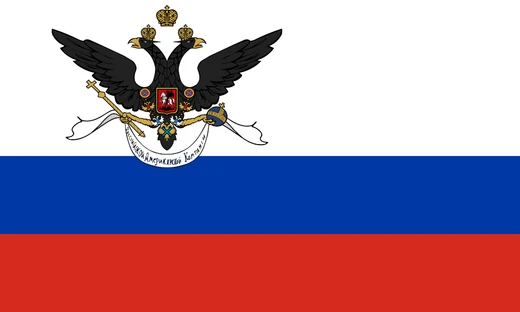
Fort Ross, California
Southernmost Russian settlement in North America, 1812–1841.
Fort Ross, in present-day Sonoma County, California, was a Russian settlement on North America’s west coast. It was the first community north of the Spanish missions in what is now California to include multiple ethnic groups. The Russian-American Company owned and ran the fort, which from 1812 to 1841 served as the center of the southernmost Russian settlements in North America. People from many backgrounds lived in and around it: Native Californians, Native Alaskans, Russians, Finns, and Swedes. Archaeologists have studied the site, and it is now a California Historical Landmark, a National Historic Landmark, and listed on the National Register of Historic Places. It lies within California’s Fort Ross State Historic Park.
The name “Fort Ross” first appears on an 1842 French chart by Eugène Duflot de Mofras, who visited California in 1840. The word “Ross” likely comes from the Russian root *rus* or *ros*, the same base as “Russia” (Россия, Rossiya). In Russian, the fort was called Форт-Росс (Fort Ross) or originally Крѣпость Россъ (Fortress Ross). According to William Bright, “Ross” is a poetic Russian term for a Russian. The Spanish sometimes called it Presidio Ruso or Presidio de Bodega.
Spanish expansion into the Western Hemisphere began with Columbus in 1492, moving west across the Atlantic and then around or through the Americas to the Pacific. Misión San Diego was settled in 1769, and in 1777 the Presidio de Monterey became the capital of the Province of Las Californias. Meanwhile, Russia expanded east across Siberia and the northern Pacific, establishing a colony in Alaska in 1799. In the early 1800s, Spanish and Russian expansion met along the coast of Spanish Alta California, with Russia moving south and Spain moving north. British and American fur trade companies had also set up coastal posts in the Pacific Northwest, and Mexico would soon gain independence. Mexico ceded Alta California to the United States after the Mexican–American War (1848). The Russian Fort Ross settlement began under Spanish rule and ended under Mexican rule.
The earliest known people at the site lived there during the Upper Archaic period (1000 B.C. – A.D. 500) and the Lower Emergent period (A.D. 1000–1500), but the main occupation started around A.D. 1500 and continued until 1812. Archaeological and ethnographic evidence shows that Native Californians lived in large, mo
- established
- 1812
- abandoned
- 1841
- location
- Sonoma County, California, United States
- operated_by
- Russian-American Company
- also_known_as
- Fortress Ross, Presidio Ruso, Metini
- current_status
- California Historical Landmark, National Historic Landmark, part of Fort Ross State Historic Park
Lore & Background
Fort Ross was established by Commerce Counselor Ivan Kuskov of the Russian-American Company. In 1808, Baranov sent two ships, the Kad'yak and the Sv. Nikolai, on an expedition south to establish settlements, with instructions to bury possession plaques. After a failed attempt in 1811, Kuskov sailed the brig Chirikov back to Bodega Bay in March 1812, naming it the Gulf of Rumyantsev. He selected a site 15 miles north that the native Kashaya Pomo people called Metini, which became Fortress Ross.
Reader's Guide
Fort Ross was established as an agricultural base to supply northern settlements with food and to continue trade with Alta California. It was the site of California's first windmills and shipbuilding, and Russian scientists associated with the colony were among the first to record California's cultural and natural history. The settlement was notably cosmopolitan, including Native Californians, Native Alaskans, Russians, Finns, and Swedes. The colony included a port at Bodega Bay, a sealing station on the Farallon Islands, and three small farming communities called ranchos. Fort Ross has been the subject of archaeological investigation and is a California Historical Landmark, a National Historic Landmark, and on the National Register of Historic Places.
Did You Know?
- The name Fort Ross appears first on a French chart published in 1842 by Eugène Duflot de Mofras.
- The fort's name is said to derive from the Russian word 'rus' or 'ros', the same root as 'Russia'.
- The native Kashaya Pomo name for the site was 'Metini'.
- Fort Ross was the site of California's first windmills and shipbuilding.
More in Russian colonization of North America 1-24
Spotted an error? Know more?
This is a living reference — every entry is fact-audited, and reader corrections feed straight into our audit queue. Suggest an edit · See this site's audit record